
HypnoFertility Sydney | North Shore
Our Certified HypnoFertility Expert, Samantha Jones, is ready to help you with fertility hypnosis at North Shore & City Hypnotherapy Sydney!

HypnoFertility can assist you with:
The road to having or completing a family can be a challenging one for some.
So many factors can affect fertility – stress, diet, hormones, weight, lifestyle, habits/addictions, etc.
And of course, there are those who seemingly do everything ‘right’ according to experts, but are labelled ‘infertile’, or with ‘unexplained infertility’.
This plays a part in eroding the trust and belief that it is possible to conceive, carry and give birth to a healthy, happy baby.
Since conception is a natural phenomenon, and a normal part of life for many men and women, ‘unexplained infertility’ also leads us to believe that other factors blocking this mind-body process may be at play – beliefs, attitudes, thoughts, fears, conditioning, unresolved issues from the past, etc.
And awareness of them may not be conscious.
That is where skill, expertise and experience is necessary.
Why Choose North Shore & City Hypnotherapy Sydney for HypnoFertility?
Samantha Jones is a trained and certified HypnoBirthing® Fertility Consultant with more than 25 years of experience in private practice.
She has assisted many in challenging circumstances, against all odds, to conceive and literally give birth to miracle babies!!
Whether there be biological issues or psychological ones (each has an effect on the other!), however complex, we are here to help.
ALL WELCOME!
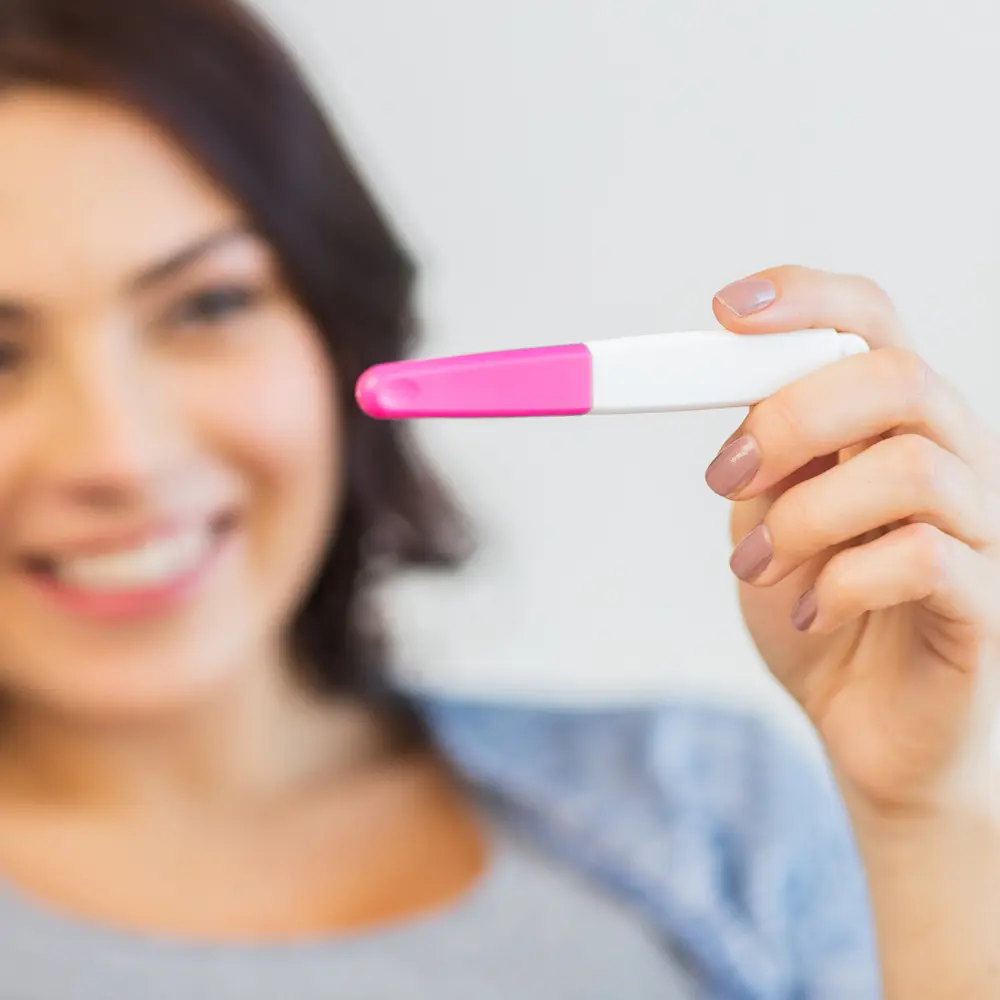

We look forward to helping you with all aspects of fertility, conceiving, pregnancy & bringing your beautiful baby into the world!
REVIEWS
* Individual results may vary.
SCIENTIFIC RESEARCH
* By clicking on the following links, you will be taken to another website.
The effect of hypnofertility on fertility preparedness, stress, and coping with stress in women having in vitro fertilization: A randomized controlled trial (2022)
[Abstract]
Background: In vitro fertilisation is a stressful process for women. Hypnofertility is a method that can be used to relieve stress during in vitro fertilisation. It is based on an effective and strong body-mind interaction, as well as balancing the brain and body via positive words and thoughts.
Objective: This study aimed to investigate the effects of hypnofertility on fertility preparedness, stress, and coping with stress in women undergoing in vitro fertilisation.
Methods: This study was conducted with a randomised controlled trial design. Hypnofertility-based relaxation, visualisation, imagination, and affirmation techniques were applied to the intervention group at four stages, and no initiative was applied to the women in the control group. The Clinical Trial Registration number of the study is NCT04755270.
Results: After the hypnofertility method, the mean score of the intervention group in the positive feelings and thoughts subscale of the Fertility Preparedness Scale was higher than that of the control group (p < 0.05). The hypnofertility method caused a significant decrease in the level of infertility stress in the intervention group, and the intervention group used the active-confronting and passive-avoidance methods more than control group did (p < 0.05).
Conclusion: The hypnofertility method increased the levels of preparedness for fertility, reduced stress levels and provided effective strategies to cope with stress.
Hypnosis versus Diazepam for Embryo Transfer: A Randomized Controlled Study (2013)
[Abstract]
Levitas et al. (2006) showed in a cohort study that hypnosis during embryo transfer (ET) increased pregnancy ratio by 76%. In order to evaluate hypnosis during ET in a general population, the authors performed a randomized prospective controlled study comparing diazepam (usual premedication) administered before ET plus muscle relaxation versus hypnosis plus placebo in 94 patients. Additionally, the authors studied anxiety pre and post ET. Anxiety scores were not different in the two groups before and after ET. No difference in pregnancy and birth ratio was found in the two groups. Hypnosis during ET is as effective as diazepam in terms of pregnancy ratio and anxiolytic effects, but with fewer side effects and should be routinely available.
Impact of hypnosis during embryo transfer on the outcome of in vitro fertilization-embryo transfer: a case-control study (2006)
[Abstract]
Objective: To investigate whether hypnosis during ET contributes to successful IVF/ET outcome.
Design: Case-control clinical study.
Setting: Academic Fertility and IVF Unit, Soroka Medical Center, Beer-Sheva, Israel.
Patient(s): Infertile couples undergoing IVF.
Intervention(s): Ninety-eight IVF/ET cycles with hypnosis during the ET procedure were matched with 96 regular IVF/ET cycles.
Main outcome measures: Comparison of clinical pregnancy and implantation rates between the two groups.
Result(s): We obtained 52 clinical pregnancies out of 98 cycles (53.1%) with an implantation rate of 28% among hypnosis IVF/ET cycles, and 29 out of 96 (30.2%) clinical pregnancies and an implantation rate of 14.4% in the control cycles. Our overall IVF program pregnancy rate for the same period was 32.1%. Logistic regression analysis was performed emphasizing the positive contribution of hypnosis to the IVF/ET conception rates.
Conclusion(s): This study suggests that the use of hypnosis during ET may significantly improve the IVF/ET cycle outcome in terms of increased implantation and clinical pregnancy rates. Furthermore, it seems that the patients’ attitude to the treatment was more favorable.